October 1, 2025


Summary of the event
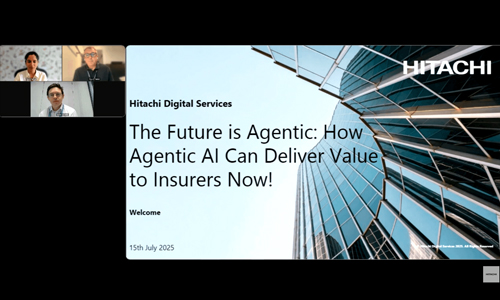
The Hitachi Finance Modernization Forum, featuring experts from The Hackett Group, Hitachi Digital Services, and Oracle, examined how Artificial Intelligence (AI) is reshaping the finance function. Speakers agreed that AI adoption has become a strategic imperative as finance teams face mounting workloads, tighter budgets, and a widening productivity gap. According to The Hackett Group, while finance workloads are rising by more than four percent annually, budgets and staffing are declining—creating a 4.9 percent shortfall that cannot be closed through technology investment alone. AI is forecast to be the primary driver of improvement, expected to deliver more than ten percent productivity gains by 2028 and as much as forty-two percent efficiency savings in finance by 2030.
Despite growing awareness of AI’s potential, adoption across finance remains in its infancy. Only a small fraction of organisations—around five percent—have deployed Generative AI at scale, with most still experimenting through pilots. Many initiatives have fallen short of expectations due to process complexity, poor data quality, and unrealistic benefit projections. However, leading organisations are beginning to move beyond automation and see AI’s value more broadly—in improving data accuracy, enhancing stakeholder experience, strengthening decision-making, and achieving sustainable cost reduction.
The forum highlighted two complementary pathways to AI integration. The first is an overlay approach, where AI is layered on top of legacy systems to solve targeted problems. Hitachi Digital Services’ work with DS Smith illustrated this model, using large language models and video analytics to automate 95 percent of invoice processing in SAP—creating a scalable AI capability for other finance functions. The second is an embedded approach, demonstrated by Oracle’s Fusion Cloud ERP, where AI is built into the core of modern finance platforms. Oracle’s integrated AI capabilities now manage forecasting, reporting, and transactional processes, enabling its own finance team to complete a fully audited global close in just ten days, with a one-day close as the next milestone.
Ultimately, the forum concluded that AI-driven transformation requires more than technology—it demands a complete reimagining of how finance operates. Success will depend on process redesign, robust data governance, strong partnerships, and investment in people. Finance professionals must be equipped to collaborate with AI, guided by a culture of agility, innovation, and ethical responsibility. As The Hackett Group noted, Oracle currently leads the market in embedded AI for finance, but the true differentiator for organisations will be their willingness to embrace AI as a catalyst for strategic, data-driven change in the years ahead.
Key Takeaways :
- AI is now a strategic necessity for finance functions, bridging the widening gap between rising workloads and constrained resources.
- Adoption remains early-stage, with only a small percentage of organisations moving beyond pilots to full-scale implementation.
- Two viable paths to adoption exist: layering AI on top of legacy systems for targeted improvements, or embedding AI deeply within modern ERP platforms.
- Data, governance, and talent are the real differentiators—strong foundations and skilled people are essential for success.
- Transformation is cultural as much as technological organisations must embrace change, foster innovation, and prepare finance professionals to work alongside AI.
- Oracle currently leads in embedded AI capabilities for finance, offering an early view of what an intelligent, automated finance function can achieve.
Here’s a short AI-generated podcast following the event: