Making Factory Execution
Faster and Smarter
Modern manufacturers need higher throughput, better quality, and safer operations – without a pause in production. As part of our Industry 5.0 practice, Hitachi Digital Services delivers end-to-end Smart Manufacturing capabilities to strengthen shopfloor execution, and better support innovation and sustainability. We connect systems, data, and automation through MOM/MES, digital twins, Industrial AI, and IT/OT/ET integration – enabling Factory of the Future outcomes that scale across plants, lines, and regions.
When Operations Cannot See, They Cannot Improve
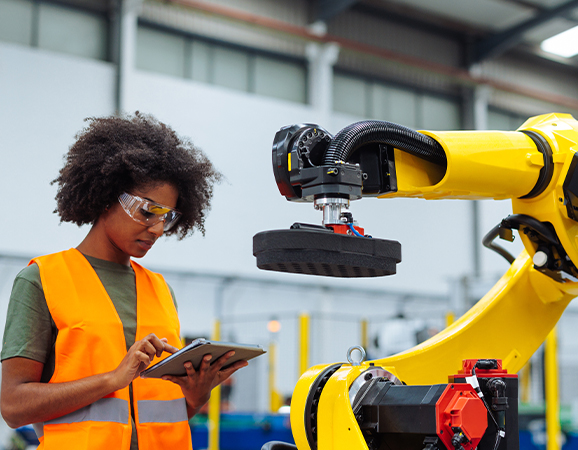
Smart Manufacturing initiatives stall when plants run on disconnected systems, inconsistent processes, and limited real-time visibility. That slows decision-making, weakens traceability increases quality drift, and leads to avoidable downtime. Standardizing execution, connecting data across systems, and embedding intelligence into daily operations sets you up to continuously improve performance.
Standardize and Scale Execution Across Plants
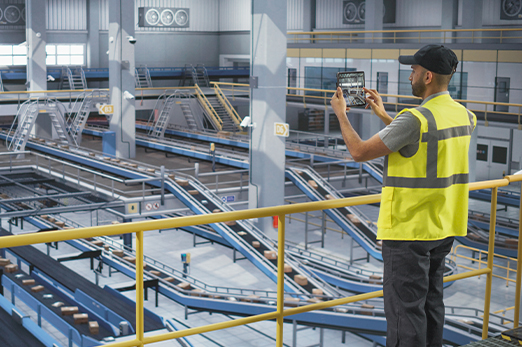
Build consistent, real-time execution across lines, plants, and regions with standardized MOM/MES capabilities that improve traceability, control, and performance visibility across manufacturing operations.
-
Standard Operating Model
Design and implement MOM/MES operating models aligned to ISA-95 for consistent execution across plants and regions. -
Execution Control
Enable production execution, scheduling, WIP tracking, and genealogy with real-time operational control.
-
Performance Visibility
Improve visibility using standardized KPIs to track throughput, quality, and operational efficiency. -
Traceability Foundation
Strengthen product traceability and compliance across manufacturing processes and systems.
Optimize Performance Before it Impacts Production
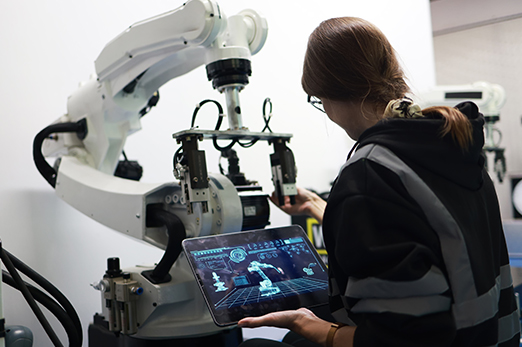
Use digital twins to simulate manufacturing scenarios, identify bottlenecks, and improve decision-making, enabling more stable operations and better performance without disrupting production.
-
Process Twins
Create digital twins of assets and manufacturing processes to model real-world behavior. -
Scenario Simulation
Run what-if simulations to evaluate throughput, stability, and production constraints.
-
Bottleneck Insight
Identify bottlenecks and performance risks early to prevent downstream disruption. -
Value Chain Visibility
Visualize performance across lines, plants, and the broader manufacturing value chain.
Embed Intelligence into Everyday Factory Execution
Apply Industrial AI, analytics, and computer vision to improve inspection, safety, maintenance, and process performance by embedding intelligence directly into manufacturing operations.

-
Automated Inspection
Use AI cameras, robotics, and computer vision to automate quality inspection and reduce defects. -
Anomaly Detection
Detect anomalies early with real-time alerts and operational analytics across production systems.
-
Predictive Insights
Enable predictive insights for quality, maintenance, and overall production performance. -
Operational Intelligence
Turn real-time data into actionable insights that support faster, more informed decision-making.
Connect Systems for Seamless, End-To-End Execution
Integrate IT, OT, and ET systems to eliminate data silos, improve process flow, and enable consistent, traceable execution across manufacturing and enterprise systems.

-
System Connectivity
Integrate ERP, PLM, and MES systems to ensure consistent data across the manufacturing lifecycle. -
Process Alignment
Improve coordination between production, inventory, and enterprise operations through connected workflows.
-
Data Continuity
Enable continuous, real-time data flow across systems to support operational decision-making. -
Auditability
Improve traceability and auditability across plants with integrated, governed data environments.
Accelerate Deployment and Scale Factory Capabilities
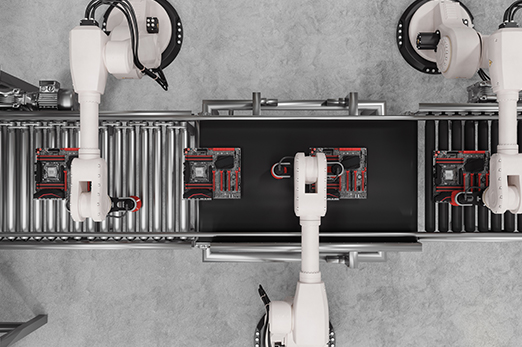
Use industry cloud accelerators, templates, and reusable models to deploy Smart Manufacturing capabilities faster and scale consistently across plants, regions, and production environments.
-
Reusable Templates
Leverage prebuilt templates and libraries to accelerate deployment across manufacturing use cases. -
Composable Solutions
Build modular, composable solutions tailored to specific production and operational needs.
-
Cloud Foundations
Deploy on multi-cloud platforms using standardized, scalable cloud services. -
Faster Rollout
Reduce implementation time and risk with proven accelerators and repeatable deployment models.
Digital Twin Delivers Performance for Bengalla Mining Company
Insights supported production uplift and additional revenue.

Realtime Analytics for Blechwarenfabrik Limburg Improves Sustainability
Standardized, integrated, real-time data analytics accelerates insights.

Logan Aluminum’s Data Platform Transformation
Digital transformation journey harnesses data to deliver better products to customers.

How We Work
Structured delivery, engineered for real shopfloors.

Built for Real Operations
We bring a 360-degree focus on Manufacturing Operations Management, combining platform expertise, global delivery, and proven execution in real industrial environments.
- MOM/MES platform provider, integrator, and user
- 200+ manufacturing facilities across Hitachi
- 1200+ MOM/MES experts across Hitachi Group companies
- Continuously evolving HDS Digital MES Transformation Playbook
- Part of the Global Lighthouse Network (Omika Works recognized by WEF)







Partners
We work across hyperscalers and industrial ecosystems to accelerate Factory of the Future outcomes – with platforms, accelerators, and integration patterns built for manufacturing environments.








INSIGHTS
 Insights
 Insights
 Insights
Related Content